Is cold texting illegal? Law and carrier rules.
Cold texting means sending sales texts to people who never agreed to hear from you. What federal law, carrier rules and state laws say about it, and the checklist for texting new leads legally.
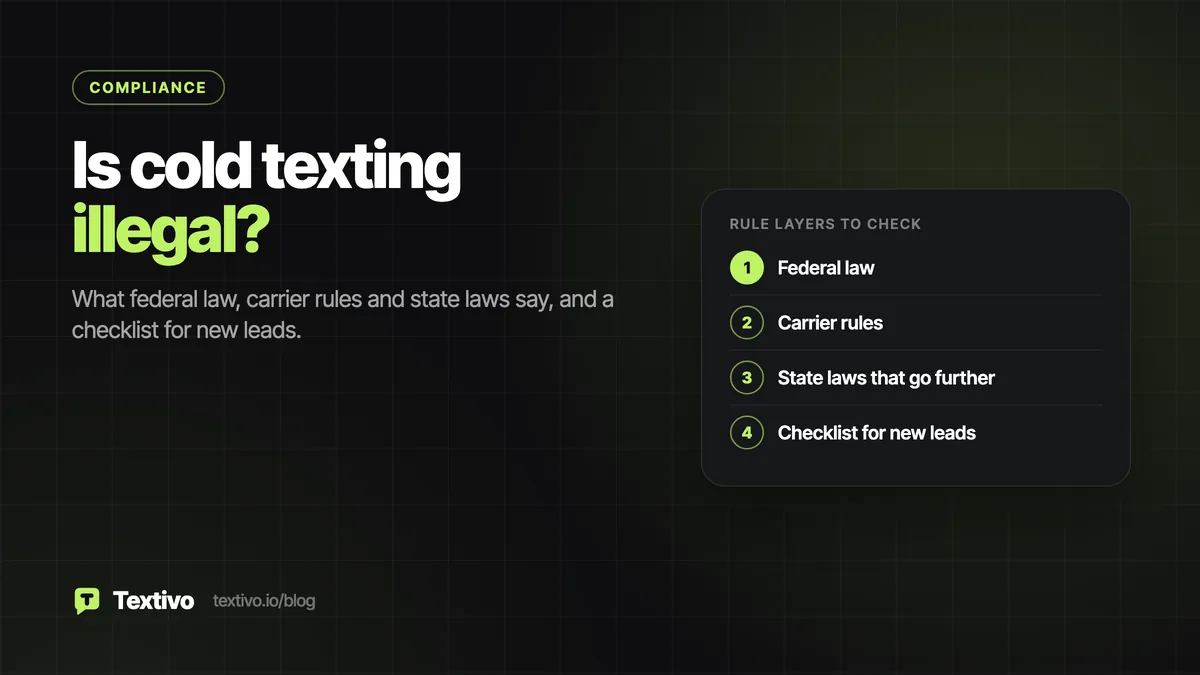
Cold texting, meaning sales texts to people who never gave you permission, is illegal in many cases and against carrier rules in all of them. Federal law requires consent for marketing texts sent with an autodialer and bars sales texts to numbers on the National Do Not Call Registry, and several states add stricter rules. The safe answer for a business is simple: text only people who agreed to hear from you.
What is cold texting?
Cold texting is sending a sales or marketing text to someone with no prior relationship and no consent, often from a bought or scraped list. It is different from texting a lead who filled in your form and agreed to texts, or answering someone who texted you first, by hand or with AI SMS. Those are warm contacts, and the rules treat them differently.
Is cold texting legal under federal law?
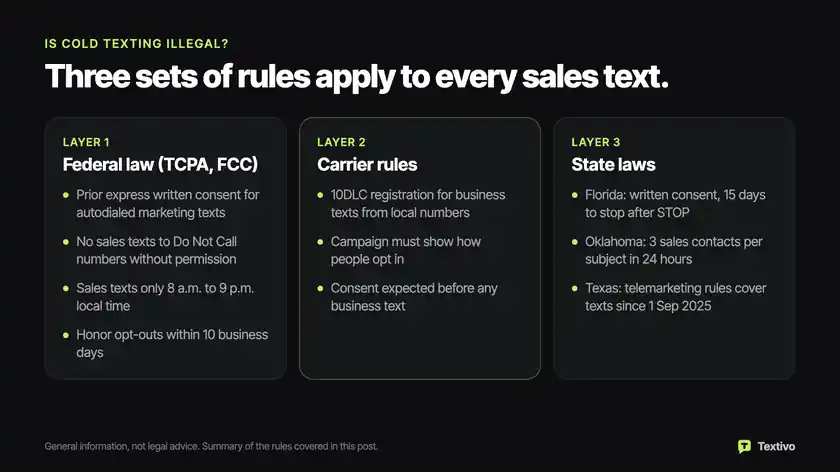
- Consent for autodialed marketing texts. The TCPA treats a text as a call. FCC rules require prior express written consent for marketing texts sent to a cell phone with an autodialer. Since the Supreme Court's 2021 Facebook v. Duguid ruling, the federal definition of an autodialer is narrower, but several state laws use broader ones, so plan on getting consent either way.
- Do Not Call Registry. FCC rules ban sales texts to numbers on the National Do Not Call Registry unless the person gave you signed permission or has an existing business relationship with you. The rules expect you to check against a copy of the registry no more than 31 days old.
- Hours. Sales texts may not go out before 8 a.m. or after 9 p.m. in the recipient's local time.
- Opt-outs. People can revoke consent in any reasonable way. Replies such as stop, quit, end, revoke, opt out, cancel or unsubscribe count, and the request must be honored within 10 business days.
Carrier rules on unsolicited texts.
Carrier rules are separate from the law, and they are stricter. Business texting from local numbers needs 10DLC registration, and the campaign has to show how people opt in. Carriers expect consent before any business text, and they can filter traffic that looks unsolicited or suspend the campaign that sent it.
State laws that go further.
- Florida. The Florida Telephone Solicitation Act requires prior express written consent for sales texts sent with an automated system. Before suing over texts, a person must first reply STOP, and the sender then has 15 days to stop texting. See Florida text message laws.
- Oklahoma. The Oklahoma Telephone Solicitation Act, in force since November 2022, follows Florida's model, including a limit of three sales contacts on the same subject in 24 hours. See Oklahoma text message laws.
- Texas. Since 1 September 2025, Texas telemarketing rules cover text messages, so a business that texts sales offers may need to register with the Texas Secretary of State unless an exemption applies. See Texas text message laws.
- Other states. Check California text message laws, New York text message laws and Washington text message laws if you text people there.
What happens if you break the rules?
A person can sue under the TCPA for $500 for each text sent in violation, and a court can raise that to $1,500 if the violation was willful or knowing. There is no cap on the total, so a campaign to thousands of numbers adds up fast. Do Not Call claims need more than one text in 12 months from the same sender. Florida's law also allows $500 per violation, up to three times that if willful, and carriers can block the numbers or the campaign on top of any lawsuit.
How to text new leads legally.
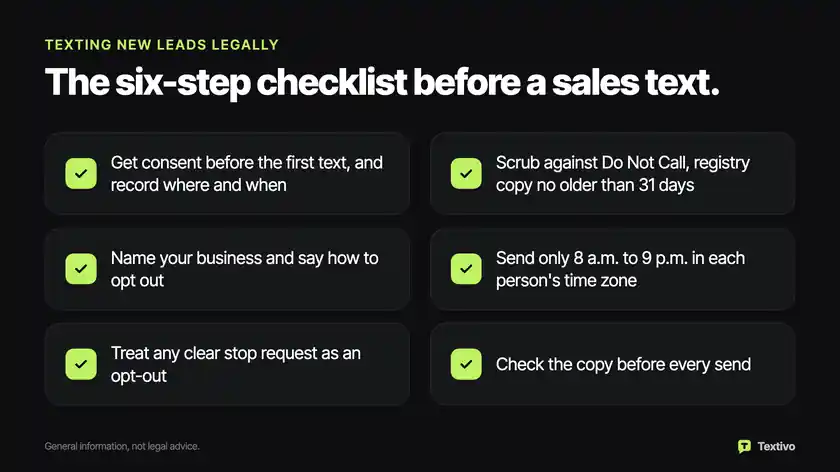
- Get consent before the first text. Use a web form or a keyword opt-in that says the person agrees to marketing texts from you, and keep a record of where and when they agreed. Textivo stores the consent source on every contact.
- Scrub against Do Not Call for anyone who has not given written consent, using a registry copy no older than 31 days.
- Name your business and explain how to opt out. Do it in the first message, and in regular messages after it.
- Respect local hours. By default, sends are held outside 8 a.m. to 9 p.m. in each person's time zone, and some states set a shorter window. See texting quiet hours by state.
- Treat any clear stop request as an opt-out, not only the word STOP. Send one confirmation at most, with no marketing in it. Textivo handles STOP replies automatically.
- Check the copy before a send. Run the draft through the SMS compliance checker.
FAQ.
Can you be sued for cold texting?
Yes. The TCPA lets the person who got the text sue, and these cases are often filed as class actions on behalf of everyone who got the same campaign. Florida and Oklahoma also let people sue under state law.
Is cold texting legal for B2B?
Not automatically. The rules protect cell phones, and many business owners use a personal cell for work, so a text to a business contact's mobile can fall under the same consent and Do Not Call rules. Treat a B2B text like any other.
Is cold texting illegal in California?
The federal rules above apply in California like everywhere else, and California adds its own consumer privacy and advertising laws. The California link in the state list covers them.
Does a reply give me consent to keep texting?
A reply lets you answer what the person asked. It is not consent to a marketing sequence, so ask before you add them to one.
Does 10DLC registration make cold texting legal?
No. 10DLC registration is a carrier requirement. It does not give you consent; consent is the legal condition, and you still need it from each person.
Conclusion.
Cold texting without consent breaks carrier rules everywhere and federal or state law in many cases, and the price is $500 or more per text. Build your list from people who opted in, and set opt-outs, quiet hours and records before the first send. The TCPA text message rules page covers consent in detail.
This is general information, not legal advice.
Opt-outs and quiet hours, handled by default.
Sends held to quiet hours in each person's time zone, STOP replies handled automatically and the consent source stored on every contact. Consent and content stay yours.